.avif)
How to Earn Bitcoin Yield: The Complete Guide for 2026
This content is for informational purposes only and does not constitute financial, investment, or legal advice. Past performance is not indicative of future results. Yields are variable and not guaranteed. Participation in staking, DeFi, or any blockchain protocol involves risk.

Over $1 trillion in Bitcoin capital sits dormant. Despite growing adoption, particularly among institutions and digital asset treasuries, the vast majority of BTC sees no productive use. Holders buy and hold, and that's it.
That's starting to change. Stacks has built the infrastructure to activate Bitcoin: lending, borrowing, stacking, yield vaults, and liquidity provision, all settling directly on Bitcoin, all without handing custody to a centralized intermediary.
The Bitcoin economy is here. Here are the best ways to start earning more Bitcoin today.
New to Stacks? Read the following article first: Stacks explained in 5 minutes
Who Is This Guide For?
Passive holders. You want your BTC earning yield without daily management. Start with STX stacking (historically up to 10% APY in BTC), sBTC dual stacking, or the hBTC yield vault. Deposit once and let your Bitcoin work in the background.
Active DeFi users. You're comfortable managing positions and want to maximize returns. BTC-backed lending on Zest and Granite lets you borrow against your Bitcoin and deploy stablecoins across DeFi for 10%+ effective yields (variable, based on market conditions). Concentrated liquidity on Bitflow rewards hands-on capital allocation.
Institutional allocators. You need custody-grade infrastructure alongside yield. Zest and Granite integrate with Fireblocks and Copper, and dual stacking supports large sBTC positions with BTC-denominated returns.
Activating Bitcoin with BTCFi
BTCFi is DeFi built around Bitcoin. Rather than relying on opaque centralized platforms, BTC holders can now participate in lending, borrowing, stacking, and yield generation while retaining control of their assets.
Stacks leads all Bitcoin L2s by BTC supply and has secured tier-1 partnerships including Circle for USDCx, and BitGo, Fireblocks, and Copper for institutional custody and access, alongside a thriving DeFi ecosystem and a pipeline of forthcoming upgrades.
5 Ways to Earn Bitcoin on Stacks
1. Stack BTC and STX for Up to 10% APY
Best for: Conservative to moderate holders.
Hold Bitcoin, earn Bitcoin.
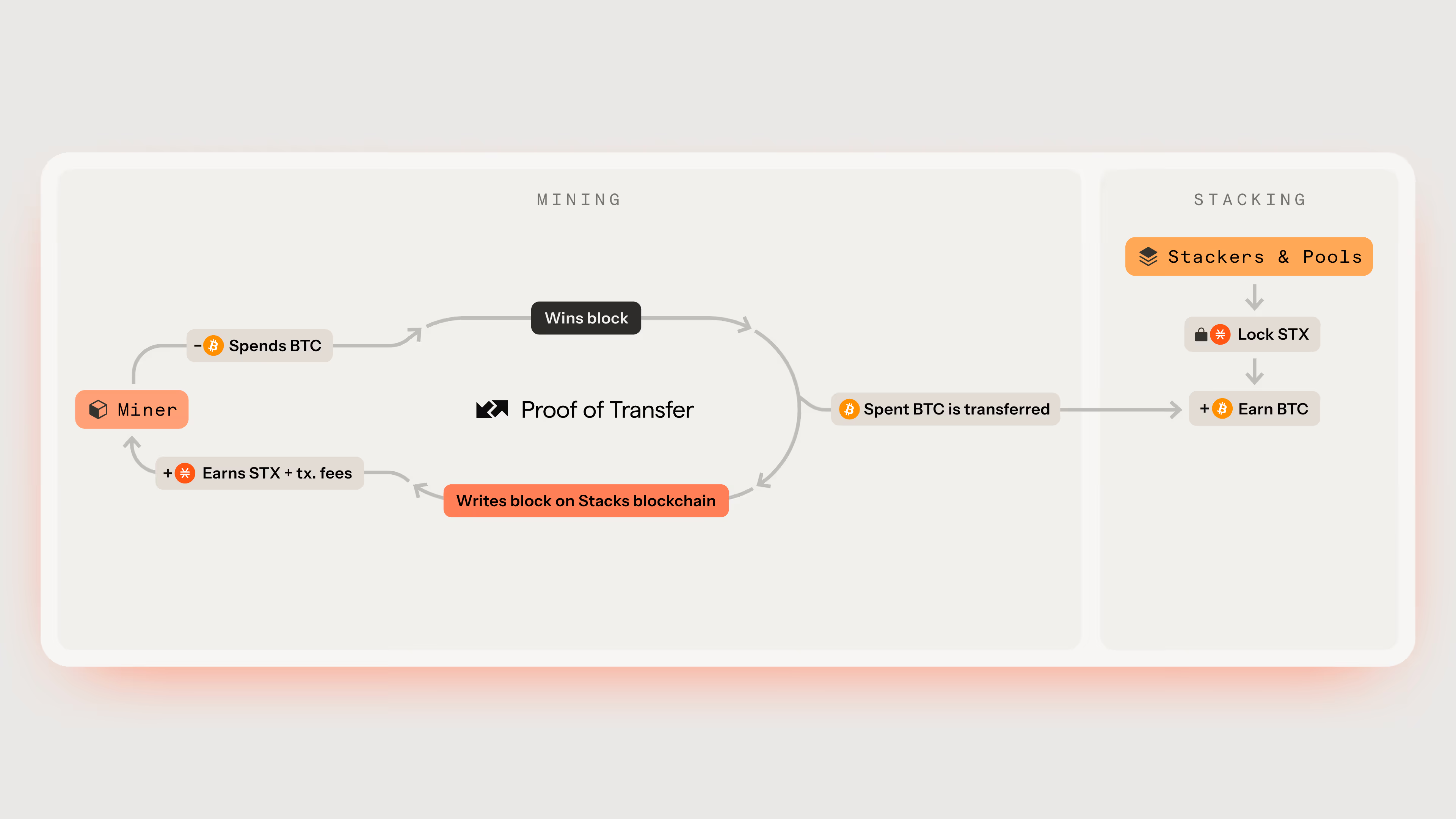
Stacks' Proof of Transfer (PoX) consensus makes this possible. Miners commit BTC to produce Stacks blocks and receive STX from the network's economic activity in return. That committed BTC is then distributed to STX stackers proportionally. Historically, this has delivered approximately 8-10% APY paid directly in BTC (variable, based on network conditions and miner participation).
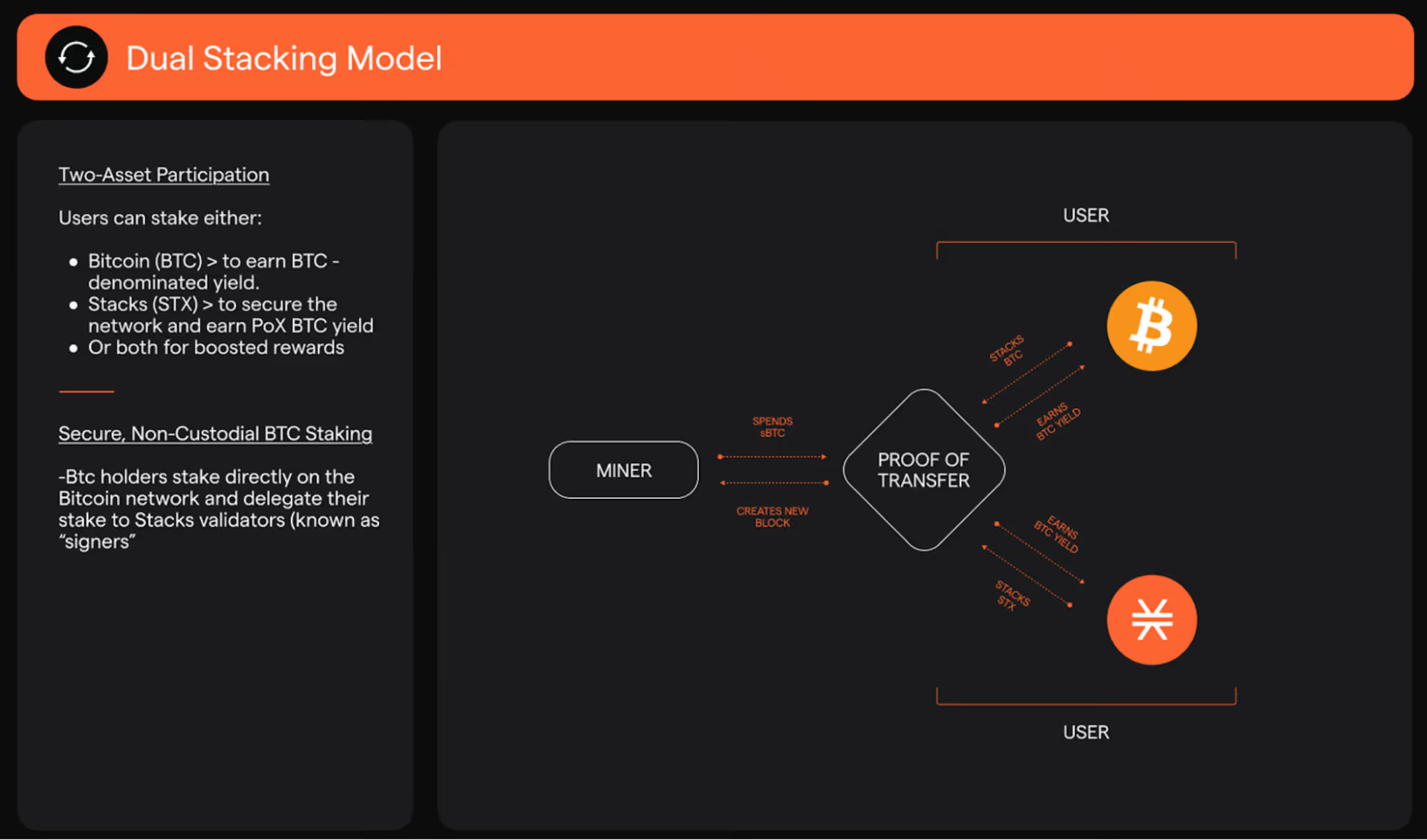
The model has now evolved into Dual Stacking. STX stackers continue to earn up to 10% APY in BTC (variable), while sBTC holders earn an estimated 0.5% APY by default, with up to a 10x boost (estimated 5% APY) for those who deploy sBTC into DeFi or stack STX alongside their holdings. Actual rates depend on network conditions and participation levels. sBTC is redeemable for native BTC at any time.
Start earning yield on your sBTC and boost your returns through dual stacking here.
How risks are managed: sBTC uses a decentralized signer set to maintain its peg, trust-minimized rather than custodial. STX price volatility affects the value of stacked positions, and yields fluctuate with miner participation. Stacking is designed to reward long-term holders.
2. Access Liquidity Without Selling BTC
Best for: Active earners and institutions.
Earn yield on your BTC, or borrow against it to access liquidity without triggering a taxable event.
Pantera Capital reported more than $1 billion in BTC-backed loans in 2025, citing the Stacks ecosystem and Zest Protocol among the key developments driving this growth.
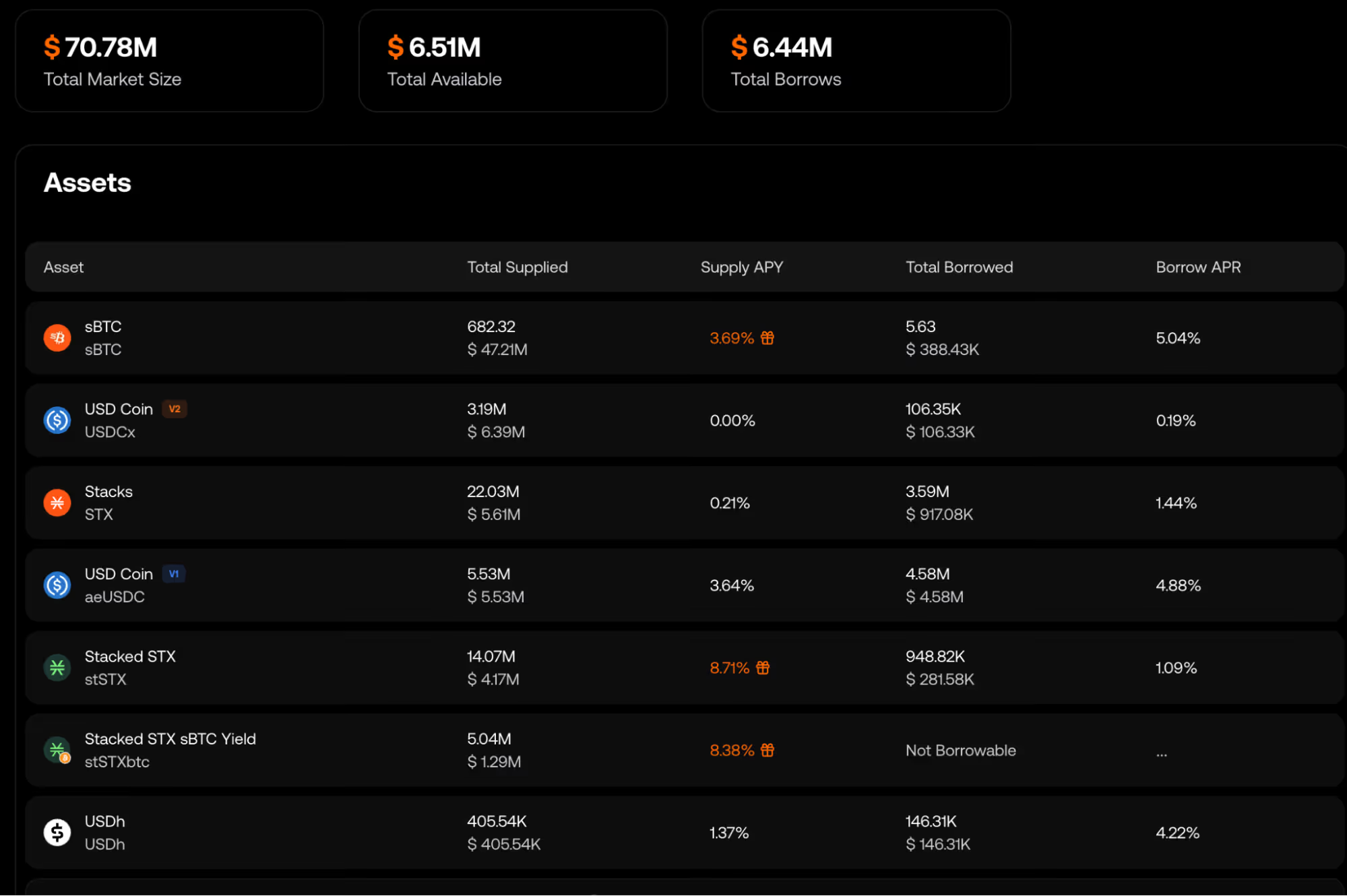
Zest Protocol leads in scaling BTC-backed loans, with over $70M currently deposited (including 680+ sBTC). Users earn yield based on borrowing demand, and can use sBTC as collateral to borrow stablecoins and compound returns further. For example, borrowing USDCx at current rates as low as 0.19% APY, swapping to Hermetica's USDh, and staking for up to 15% APY. Rates are variable and change with market conditions.
Here are short video guides on getting started, from basic supplying through to advanced strategies.
Granite is another leading protocol, focused exclusively on BTC and stablecoin liquidity. Deposit USDCx to earn yield, or use sBTC as collateral to borrow.
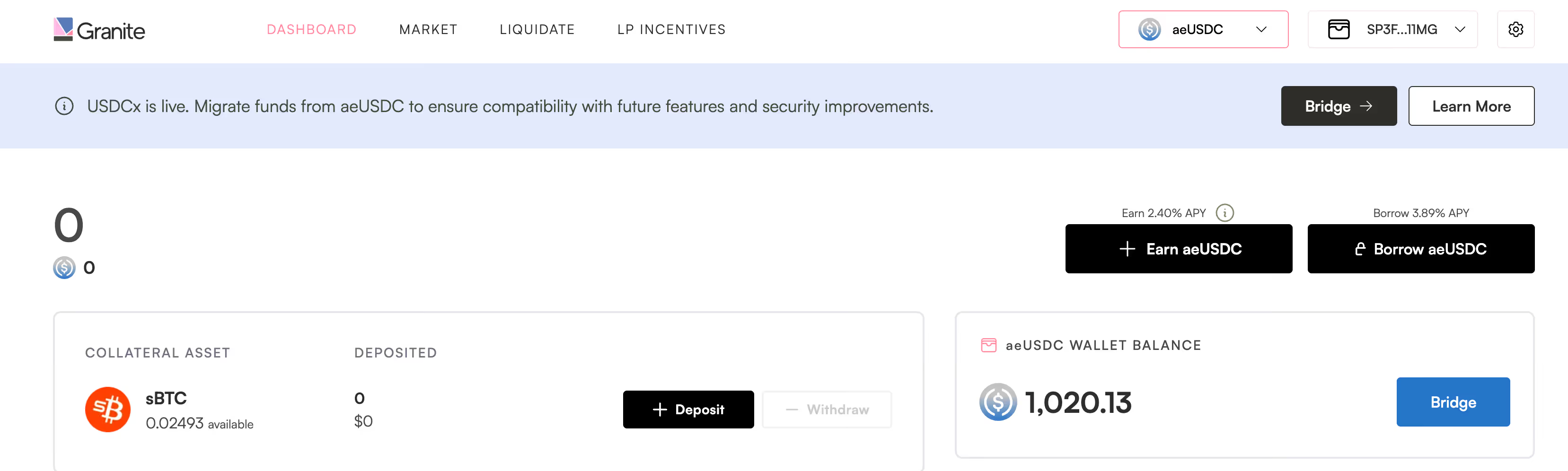
How yields work: Supply APY depends on utilization: higher borrowing demand means higher returns for suppliers. Borrowing APR adjusts inversely to attract demand. Supply-side deposits have historically delivered around 2-5% APY, while borrow-and-deploy strategies can push effective yields beyond 10%. All rates are variable and not guaranteed.
How risks are managed: Lending protocols use transparent, auditable smart contracts with clearly defined liquidation parameters. If collateral value drops below the protocol threshold, positions are automatically liquidated to protect lenders. Conservative loan-to-value ratios provide a buffer against volatility.
3. One Click, Up to 8% APY With Bitcoin Earn Vaults
Best for: Holders who want automated yield without active management.
Hermetica is launching hBTC, a one-click Bitcoin yield vault targeting up to 8% APY (variable, not guaranteed). Deposit native BTC, withdraw native BTC plus accrued yield at any time.
The vault automatically manages a multi-step strategy: deposited BTC is converted to sBTC, deployed as collateral on Zest (~3.5% APY via dual stacking rewards), used to borrow USDCx which is converted to USDh, and staked for up to 15% yield from funding rates (variable), with returns converted back to sBTC, redeemable for native BTC.
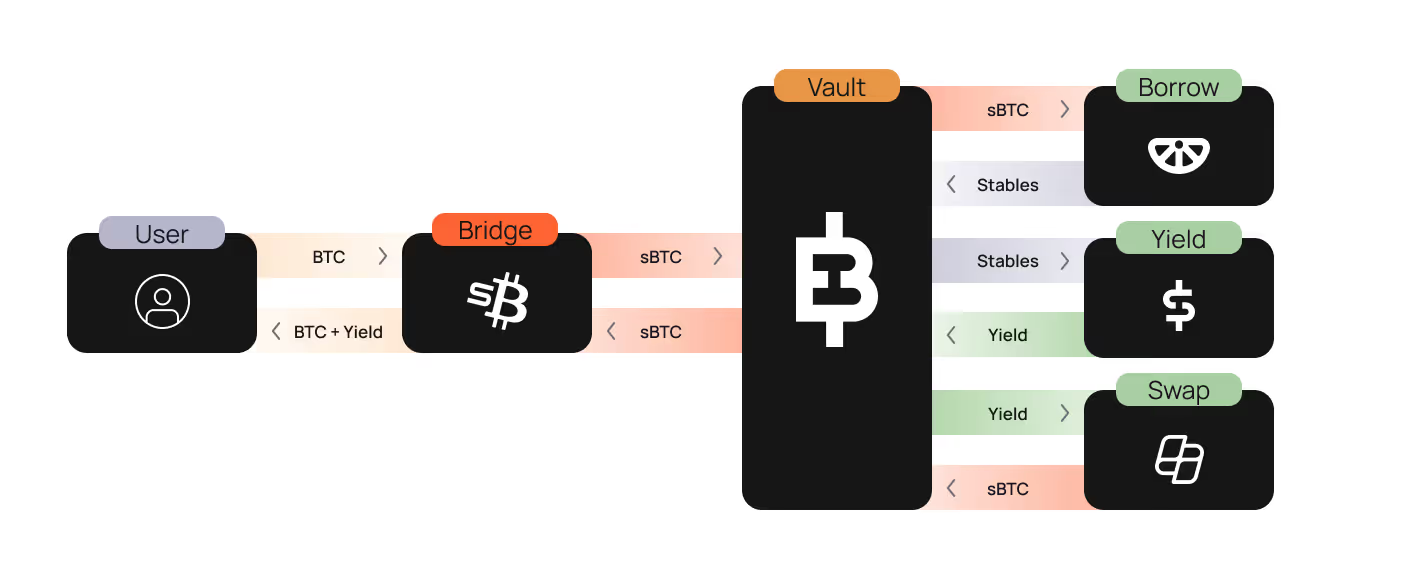
Advanced yield strategies that previously required active management are now accessible to any Bitcoin holder.
How risks are managed: The vault uses audited smart contracts across each step. Returns depend on the continued stability of sBTC, USDCx, and USDh. The multi-layer design means each component carries its own security profile, and users should understand the full strategy before depositing.
4. Earn Fees from Every Swap by Providing Liquidity
Best for: Active earners familiar with liquidity provision.
Bitflow, the leading DEX on Stacks, enables users to deposit paired assets into pools (e.g. sBTC/STX, USDCx/sBTC) and earn yield from trading fees.
Bitflow is preparing to launch a concentrated liquidity engine. Traditional pools spread capital across the entire price range, most of it sitting idle. Concentrated liquidity lets providers target a specific price band where trading actually occurs, earning significantly more fees per dollar deposited. Traders benefit too, through lower slippage on swaps.
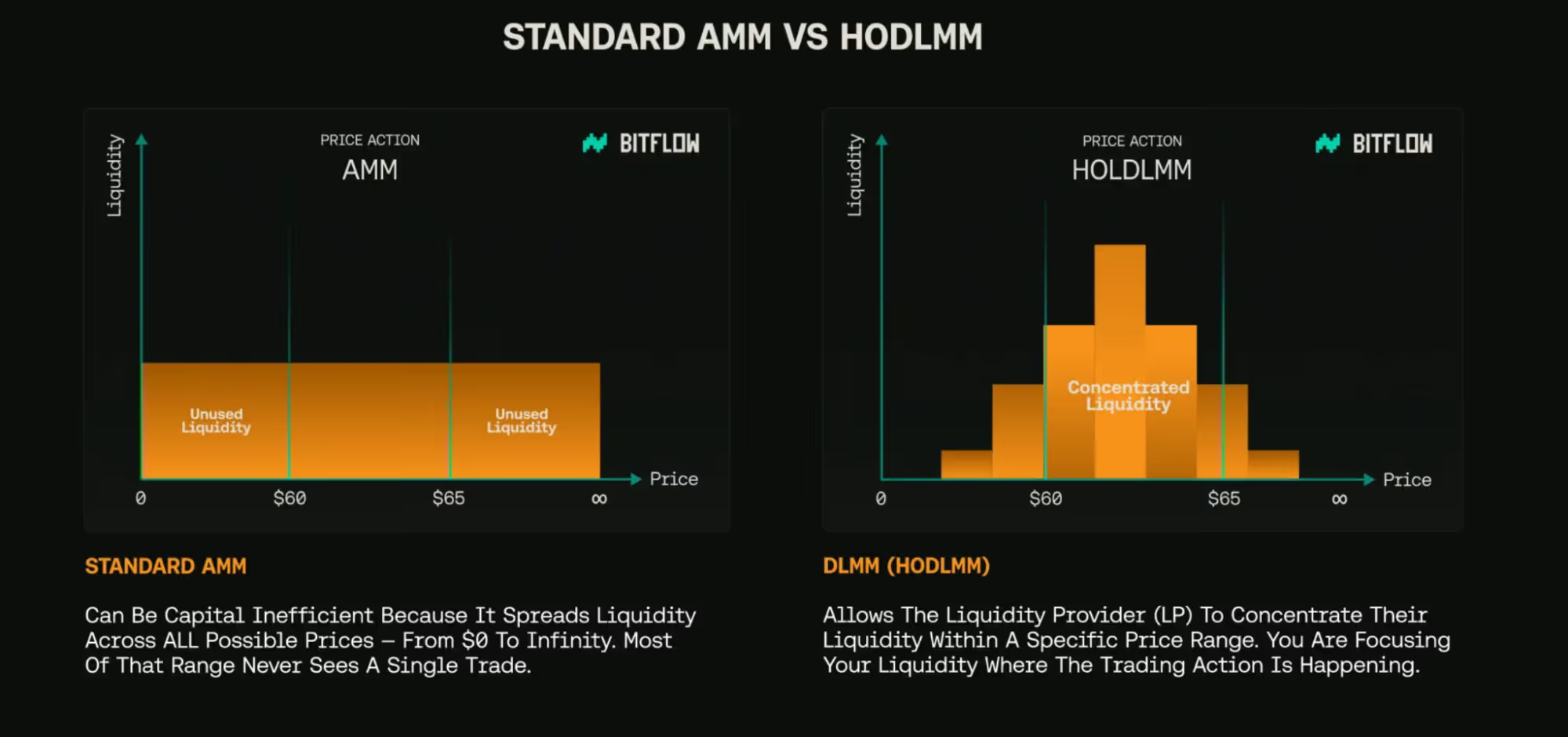
Yield depends directly on trading volume. Under the concentrated model, providers who set effective ranges earn proportionally more.
How risks are managed: Concentrated liquidity offers higher capital efficiency but requires active range management. If the price moves outside a provider's chosen range, the position stops earning and must be rebalanced. Impermanent loss, where price movement causes a position to underperform simply holding, is amplified under this model. Bitflow provides tools to help providers monitor and adjust positions.
5. Self-Custodial BTC Staking — Coming Soon
Best for: Conservative holders who want to stake BTC without custody trade-offs.
Babylon experimented with self-custodial Bitcoin staking on mainnet, with yields paid in BABY (its governance token). Combined yields when staking BABY alongside BTC have been modest to date.
Stacks is building its own iteration. The key difference: yield is paid in native BTC, not a native token. The model eliminates the need for BTC-backed tokens and their custody trade-offs, and offers a natural scaling path for institutional participants who could borrow STX to stack alongside their Bitcoin.
This model is currently in development. More details will be shared as the design is finalized.
How Stacks Addresses Historical DeFi Risks
The CeFi era (Celsius, BlockFi, Voyager) taught Bitcoin holders a hard lesson about counterparty risk. Stacks DeFi is built on a fundamentally different model.
Custody risk. CeFi platforms required handing over your Bitcoin entirely. Stacks DeFi is non-custodial: users interact with transparent, auditable smart contracts and retain control of their assets. The underlying code is open and verifiable.
Stablecoin risk. Strategies involving USDCx benefit from Circle's reserve-backed model, a fundamentally different architecture than algorithmic stablecoins like UST. USDh (Hermetica) uses a funding-rate-based model. Both carry their own risk profiles, and understanding the backing mechanism of each stablecoin in a strategy chain is important.
Smart contract risk. All DeFi protocols carry code-level risk. Stacks protocols are audited, and Clarity, Stacks' smart contract language, is designed with security as a first principle: it's decidable, meaning developers can reason about what their code will do before deploying it. These are meaningful mitigations, though no system is immune to vulnerabilities.
Why Earn Bitcoin Yield on Stacks?
Stacks vs. Centralized Platforms
CeFi offered simplicity but zero visibility and full custody handover. When those platforms collapsed, depositors had no recourse. With Stacks, users interact with transparent smart contracts, retain control of their assets, and can verify how yield is generated.
Stacks vs. Ethereum DeFi with Wrapped BTC
Ethereum hosts mature DeFi, but deploying Bitcoin there requires wrapping: WBTC (custodied by BitGo) or cbBTC (custodied by Coinbase). You're no longer holding Bitcoin; you're holding an ERC-20 token backed by trust in a third party.
The Stacks Advantage: Bitcoin-Native
Stacks transactions settle on Bitcoin itself, inheriting its finality and security guarantees. sBTC is a trust-minimized BTC asset, not a custodial wrapper. Yield is generated through mechanisms rooted in Bitcoin's own consensus via Proof of Transfer. And the entire DeFi ecosystem (lending, vaults, stablecoins, DEXs) is purpose-built around Bitcoin holders.
The Nakamoto upgrade enables transaction confirmation in seconds. Tier-1 integrations with Circle, Fireblocks, Copper, BitGo, and Nansen provide institutional-grade infrastructure. And approximately 5,000 sBTC on the network makes Stacks the leading Bitcoin L2 by BTC supply.
Getting Started
Set Up a Wallet
Download Leather or install Xverse. Both support BTC, sBTC, STX, and Stacks tokens.
- Download the wallet extension or mobile app.
- Create or import a seed phrase.
- Secure your recovery phrase offline.
Fund Your Wallet
- Deposit BTC, then bridge to sBTC here.
- Acquire STX on an exchange if needed for transaction fees.
Choose a Strategy and Start Earning
All yields are approximate, variable, and based on conditions at time of writing. Past performance is not indicative of future results.
Pick a protocol, connect your wallet, and start depositing. It really is that straightforward.
Activate Your Bitcoin
Over $1 trillion in Bitcoin capital is waiting to be activated. The infrastructure is live, the strategies are accessible, and the Bitcoin economy on Stacks is growing.
Your BTC doesn't have to sit idle. Start putting it to work today.
Last updated: March 2026. All yield figures are approximate, variable, and subject to change based on market and network conditions. Past performance is not indicative of future results. This article is for informational purposes only and does not constitute financial, investment, or legal advice. Participation in DeFi protocols involves risk, including potential loss of assets. Always do your own research before participating in any protocol.
Get more of Stacks
Get important updates about Stacks technology, projects, events, and more to your inbox.