.avif)
What Is Bitcoin Staking? How to Stake BTC and Earn Rewards

Bitcoin staking is the process of locking BTC or BTC-related assets to support a network's security and earning rewards in return. It's one of the main ways to earn Bitcoin yield without selling your holdings.
If you've heard of staking on Ethereum or Solana, Bitcoin staking works on a similar principle: commit assets, help secure the network, get paid. But because Bitcoin runs on proof-of-work rather than proof-of-stake, the mechanics are different. Bitcoin staking happens through Layer 2 networks and specialized protocols built on top of Bitcoin.
How Does Bitcoin Staking Work?
Bitcoin's base layer uses proof-of-work mining. There's no built-in staking mechanism on Bitcoin itself. But Bitcoin Layer 2 networks have created staking systems that allow BTC holders to participate in network security and earn yield.
The two main approaches today:
Stacking on Stacks
Stacks is a Bitcoin Layer 2 where every transaction settles on Bitcoin. Its consensus mechanism includes a process called Stacking: STX holders lock their tokens to support the network and earn Bitcoin rewards. Actual BTC, paid directly.
This makes Stacking unusual in crypto. On most networks, staking rewards come in the form of the network's own token, often funded by inflation. With Stacking on Stacks, you earn a separate, harder asset: Bitcoin. It's one of the few mechanisms where consensus participation pays yield in BTC.
Work is also underway on Stacks to introduce native Bitcoin staking, which would allow BTC holders to stake Bitcoin directly to support the network and earn yield without converting to another asset first.
Staking BTC via Babylon
Babylon takes a different approach. It allows BTC holders to stake their Bitcoin directly to secure proof-of-stake chains, earning yield without bridging or wrapping. Your BTC stays on Bitcoin's base layer while cryptographic proofs are used to extend its security to other networks.
As of 2026, Babylon has grown into the second-largest restaking network with over $3 billion in TVL, signaling serious institutional and retail interest in Bitcoin staking.
Bitcoin Staking Yields: What to Expect
Yields vary by mechanism and market conditions. There is no fixed rate.
Stacking on Stacks: Yields depend on Bitcoin miner activity and the number of STX being Stacked. Returns are paid in BTC.
Babylon staking: Yields depend on which proof-of-stake networks you're helping secure and their reward structures.
Liquid staking (LBTC via Lombard): Lombard's LBTC is backed by BTC staked through Babylon. It offers approximately 1% base yield plus additional DeFi opportunities. Nearly $2B in circulation and over 40% of the Bitcoin LST market.
Industry-wide, nominal Bitcoin staking APYs range from 3–19%. Real yields after accounting for token inflation are typically lower. Be skeptical of anyone quoting fixed, guaranteed Bitcoin staking returns.
Bitcoin Staking vs. Traditional Staking
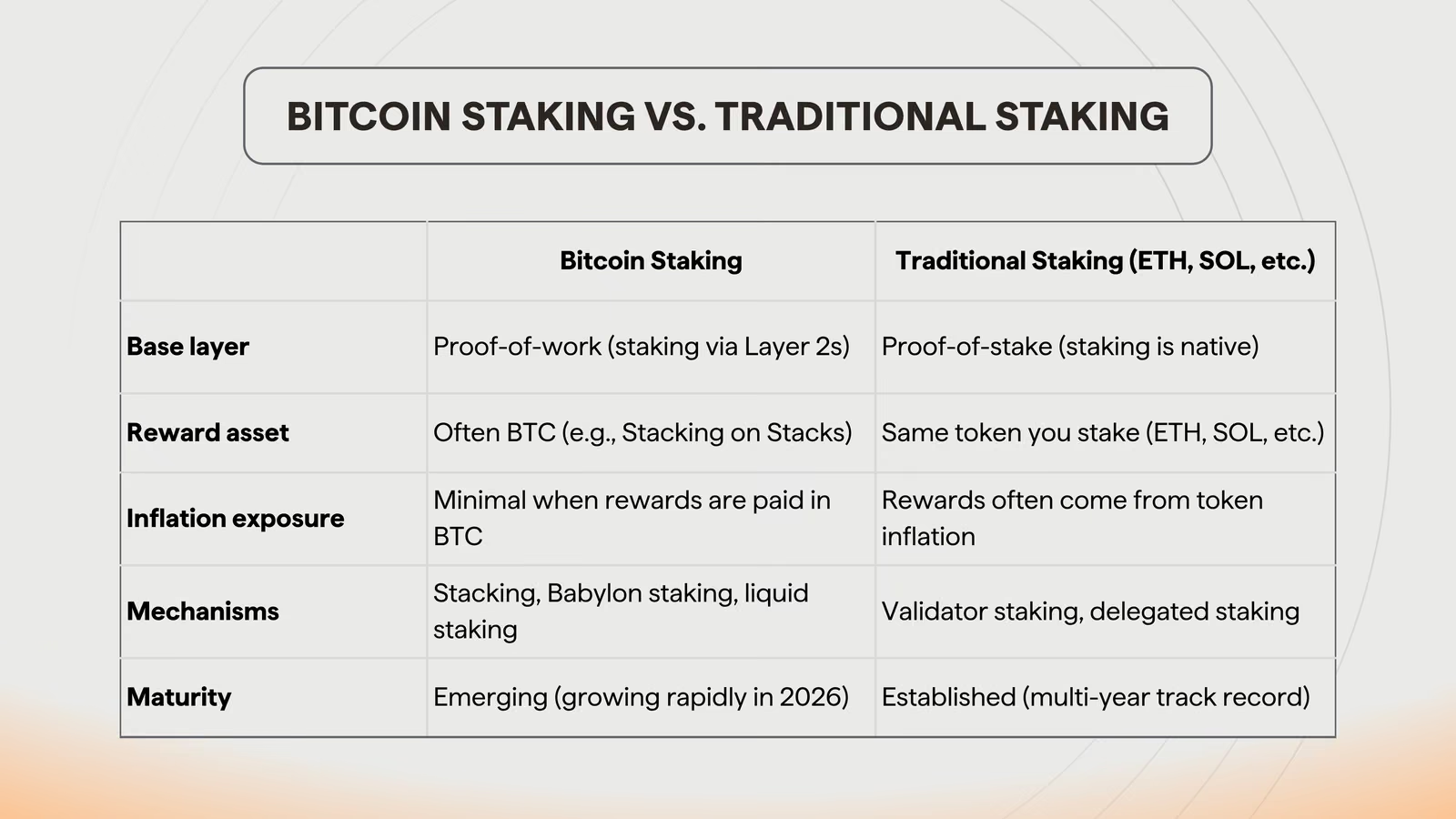
The biggest difference: Bitcoin staking is newer but offers something most staking systems don't. When you Stack on Stacks, you earn yield in BTC rather than in an inflationary token. That's a fundamentally different value proposition.
Where to Stake Bitcoin in 2026
Stacks (Stacking): Lock STX to earn BTC rewards. Requires a Stacks-compatible wallet like Leather or Xverse. No minimum for pooled Stacking.
Babylon: Stake BTC directly to secure PoS chains. Growing ecosystem with $3B+ in TVL.
Lombard (LBTC): Liquid staking token backed by BTC staked through Babylon. Usable across DeFi on multiple chains, though this moves your BTC exposure off of Bitcoin.
For a full overview of how these fit into the broader Bitcoin-native finance ecosystem, see: [What Is Bitcoin-Native Finance?] [LINK TO PIECE 3]
Risks of Bitcoin Staking
Smart contract risk. Staking protocols are software. Vulnerabilities can exist even in audited code.
Lockup periods. Some staking mechanisms lock your assets for a set period. Know the terms before committing, especially in volatile markets.
Slashing risk. Some protocols penalize validators or stakers for misbehavior or downtime. Understand whether the protocol you're using has slashing conditions.
Custodial assumptions. Centralized staking platforms require trusting a third party. Decentralized options like Stacking on Stacks or Babylon reduce (but don't eliminate) this risk.
Liquid staking risks. Liquid staking tokens like LBTC introduce peg risk. If the token depegs from BTC, your position loses value regardless of staking rewards.
FAQ
Can you stake Bitcoin?
Not on Bitcoin's base layer, which uses proof-of-work. But Bitcoin Layer 2 protocols like Stacks and Babylon have introduced staking mechanisms that let BTC holders earn rewards by supporting network security.
How does Bitcoin staking work?
Through Layer 2 networks built on Bitcoin. On Stacks, you lock STX tokens (Stacking) and earn BTC rewards. Through Babylon, you stake BTC directly to secure other proof-of-stake networks. Native Bitcoin staking on Stacks is also in development, which will allow direct BTC staking. [LINK]
What are Bitcoin staking rewards?
Rewards vary by protocol and market conditions. Stacking on Stacks pays out in BTC. Babylon staking rewards depend on the networks being secured. Nominal APYs across the industry range from 3–19%, with real yields typically lower.
Is Bitcoin staking safe?
No staking is completely risk-free. Smart contract vulnerabilities, lockup periods, and custodial assumptions all present risk. The safest approaches use decentralized, audited protocols with transparent mechanics. For a full breakdown of risks, see our guide: [What Is Bitcoin-Native Finance?] [LINK TO PIECE 3]
What's the difference between Stacking and staking?
Stacking is the Stacks network's current consensus mechanism, where STX holders lock tokens and earn BTC rewards. As native Bitcoin staking comes to Stacks, BTC holders will be able to stake Bitcoin directly to support the network and earn yield. Both share the same principle (lock assets, secure the network, earn rewards) but differ in which asset you commit. [LINK]
The Bottom Line
Bitcoin staking is how BTC holders earn yield by helping secure networks, without selling their Bitcoin. The ecosystem is maturing rapidly: Stacks pays Bitcoin rewards for Stacking, Babylon enables direct BTC staking, and native Bitcoin staking on Stacks is on the way.
The key questions before staking: what are you locking, for how long, who's holding it, and where does the yield come from? If you can answer those clearly, you're in a good position.
Want to go deeper? Read our guides on Bitcoin yield and Bitcoin-native finance.
Get more of Stacks
Get important updates about Stacks technology, projects, events, and more to your inbox.