.avif)
What Is Bitcoin-Native Finance? The Case for Native Bitcoin Yield
Bitcoin's financial infrastructure has fundamentally changed. For over a decade, earning yield on BTC meant leaving Bitcoin behind: wrapping it into a token on Ethereum, depositing it with a centralized lender, or bridging it to a chain with a completely different security model.
Bitcoin-native finance is the alternative. It's a growing ecosystem of lending, staking, trading, and structured products built directly on Bitcoin and its Layer 2 networks, where every transaction settles back to the most secure blockchain in the world. And at the center of it is a new category of opportunity: native Bitcoin yield.
What Is Bitcoin-Native Finance?
Bitcoin-native finance refers to financial products and protocols that operate on Bitcoin or Bitcoin Layer 2 networks, settling directly to Bitcoin's base layer. Instead of borrowing DeFi infrastructure from Ethereum or Solana, Bitcoin-native finance builds it natively, anchored to Bitcoin's own security model.
This includes lending markets, decentralized exchanges, staking mechanisms, and synthetic assets, all designed so BTC holders can put their Bitcoin to work without handing it to a centralized intermediary or moving it onto a foreign chain.
The distinction from traditional crypto DeFi is important. Ethereum DeFi is powerful but requires BTC holders to wrap their Bitcoin (typically as wBTC) and trust a bridging or custodial mechanism. Bitcoin-native finance removes that step. Your BTC stays within Bitcoin's economy.
What Is Native Bitcoin Yield?
Native Bitcoin yield is returns earned on BTC through protocols anchored to Bitcoin's security model. The yield comes from real economic activity: lending, providing liquidity, or participating in network consensus. Not from inflationary token emissions. Not from unsustainable incentive programs.
After the collapse of centralized yield platforms like BlockFi, Celsius, and Voyager, the appeal is clear. Native Bitcoin yield is yield you can verify, generated through transparent on-chain mechanics, settling back to Bitcoin.
For a primer on Bitcoin yield and the main mechanisms behind it, see our guide: What Is Bitcoin Yield?
Native Bitcoin Yield vs. Wrapped Bitcoin Yield
Not all Bitcoin yield is the same. The difference comes down to trust assumptions and where your BTC actually lives.
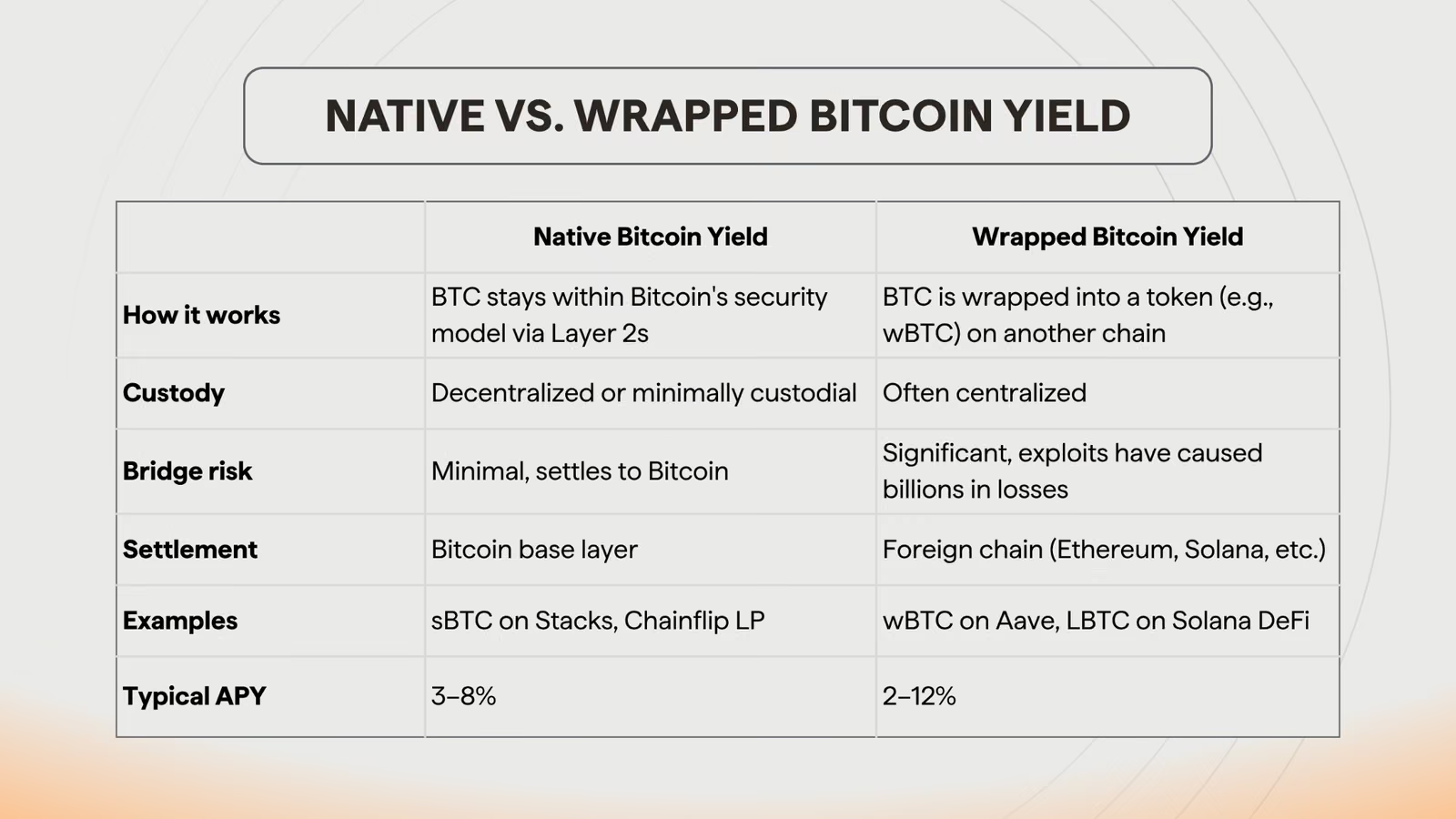
Over 125,000 BTC is currently wrapped as wBTC. Lombard's LBTC has reached nearly $2 billion in circulation. These are significant numbers, but they represent significant trust assumptions. Every wrapped BTC is a bet on the bridge or custodian holding the peg. Native Bitcoin yield reduces those assumptions by keeping BTC closer to home.
How Bitcoin-Native Finance Works on Stacks
Stacks is the leading Bitcoin Layer 2 for smart contracts and DeFi. Every transaction settles on Bitcoin, so the yield mechanisms built on Stacks inherit Bitcoin's finality and security. It's the most developed ecosystem for Bitcoin-native finance today.
Stacking STX for Bitcoin Rewards
STX holders lock their tokens to support the Stacks network and earn Bitcoin rewards: actual BTC, paid directly. Unlike Ethereum or Solana staking, where you earn inflationary tokens, Stacking pays you in a harder, separate asset. It's one of the few mechanisms in crypto where consensus participation generates yield in BTC.
For more on how Bitcoin staking works across the ecosystem, see: What Is Bitcoin Staking?
sBTC: Programmable Bitcoin
sBTC is a decentralized, 1:1 Bitcoin-backed asset on Stacks. Unlike wBTC (which relies on centralized custodian BitGo), sBTC operates through a decentralized set of signers, minimizing the custodial risk that has historically been the weakest link in Bitcoin yield.
With sBTC, native Bitcoin yield becomes programmable across lending markets, liquidity pools, and structured products, all settling back to Bitcoin.
The Stacks DeFi Stack
Zest Protocol: Bitcoin lending market. Deposit sBTC or STX to earn yield from borrowers, or borrow against your positions. Think Aave or Compound, built for Bitcoin-native finance.
Granite: Institutional-grade Bitcoin-backed lending. Overcollateralized, on-chain transparent, designed for large-scale borrowers and lenders.
Hermetica: Bitcoin-native yield strategies including a synthetic dollar product with BTC-denominated returns. Built for holders who want yield without altcoin exposure.
Bitflow: Stacks' native DEX and AMM. Provide liquidity to BTC and STX pairs and earn swap fees. The primary venue for liquidity provision on Stacks.
Together, these form the core of a Bitcoin-native financial stack where yield comes from real economic activity and settles to the most secure blockchain in the world.
The Broader Landscape
Stacks has the most developed Bitcoin-native finance ecosystem, but other approaches are emerging:
Babylon lets BTC holders stake Bitcoin to secure proof-of-stake chains, earning yield without bridging or wrapping. Different architecture than Stacks, same goal: making BTC productive.
Lombard (LBTC) offers a liquid staking token backed by BTC staked through Babylon. Nearly $2B in circulation and 40%+ of the Bitcoin LST market, though it moves BTC exposure to other chains.
Chainflip enables native BTC yield through cross-chain swap liquidity provision without wrapping.
The key question for any strategy: how far does your BTC travel from Bitcoin's security model, and what are you trusting along the way?
Risks to Know
Native Bitcoin yield is real, but not risk-free.
Smart contract risk. Even audited protocols can have vulnerabilities. Know what you're depositing into.
Custodial risk. Centralized platforms require trusting a third party. BlockFi, Celsius, and Voyager showed how that can end. Native strategies minimize but don't always eliminate custody assumptions.
Bridge risk. Wrapping BTC for use on other chains has caused billions in losses from exploits. Native yield strategies avoid this.
Peg stability. Assets like sBTC, wBTC, and LBTC depend on pegging mechanisms. Understand how the peg works and what happens if it breaks.
Liquidity risk. Some yield positions are harder to exit in volatile markets. Know your lockup terms before committing.
Yield sustainability. If yields seem too high, ask where the money comes from. If the answer isn't clear, it's a red flag.
Tax and regulatory considerations. Yield earned on Bitcoin may be taxable income depending on your jurisdiction. Regulations around crypto yield products are evolving. Consult a tax professional before deploying significant capital.
FAQ
What is Bitcoin-native finance?
The ecosystem of financial products built directly on Bitcoin and its Layer 2 networks: lending markets, DEXs, staking mechanisms, and structured products that settle to Bitcoin. The same tools available on Ethereum DeFi, without leaving Bitcoin's security model.
What is native Bitcoin yield?
Returns earned on BTC through protocols that settle on Bitcoin or Bitcoin Layer 2s. Unlike wrapped Bitcoin strategies that move BTC to foreign chains, native yield keeps your Bitcoin within Bitcoin's security model. The yield comes from real economic activity, not token inflation.
How is native Bitcoin yield different from wrapped Bitcoin yield?
Native yield strategies keep your BTC within Bitcoin's security model through Layer 2 networks. Wrapped yield requires converting BTC into a token (like wBTC) on another chain, introducing bridge risk and custodial assumptions. See the comparison table above for a full breakdown.
What is sBTC?
A decentralized Bitcoin-backed asset on Stacks, redeemable 1:1 for native BTC. Unlike wBTC (centralized custodian), sBTC uses decentralized signers, reducing custodial risk while making Bitcoin programmable in DeFi.
What's a realistic native Bitcoin yield in 2026?
It varies by mechanism.
- Lending: 2–6% APY
- Liquidity provision: depends on trading volume.
- Stacking on Stacks: depends on miner activity.
- Industry-wide, nominal staking APYs range from 3–19%, though real yields after inflation adjustments are typically lower. Fixed, guaranteed yields are a red flag.
The Bottom Line
Bitcoin-native finance is a working ecosystem where BTC holders can earn native Bitcoin yield through lending, liquidity provision, and staking, all settling back to Bitcoin, through infrastructure like Stacks, sBTC, and a growing set of protocols built for Bitcoin's economy.
The best strategies keep you closest to Bitcoin: native settlement, transparent mechanics, and clear risks.
Get Started
To start earning native Bitcoin yield on Stacks, you'll need a Stacks-compatible wallet (like Leather or Xverse) and access to sBTC. From there, you can explore Stacking, lending on Zest, or providing liquidity on Bitflow, all from a single ecosystem that settles to Bitcoin.
Ready to put your BTC to work? Start Stacking.
Get more of Stacks
Get important updates about Stacks technology, projects, events, and more to your inbox.
.png)