.avif)
What Is a Protocol Bond and Why Should BTC Holders Care?
In the context of Bitcoin Staking on Stacks, the term "protocol bond" refers to a specific technical structure for locking BTC and STX to earn yield from Stacks mining. The following explains what it is, how it works, and why it is relevant for BTC holders evaluating yield options.
A Protocol Bond in One Sentence
A protocol bond is a paired position of locked BTC and locked STX that earns onchain yield generated by Stacks miner activity.
The term "protocol bond" does not describe a financial instrument, but a technical process of locking Bitcoin and pairing it to locked STX. "Bonding" the assets - to generate a Bitcoin-denominated yield.
Although protocol bonds are a not financial instruments or contractual arrangements, it's important to be clear about a protocol bond is, and what it is not.
How Protocol Bonds Compare to a Traditional Bond
In traditional finance, a bond is a fixed-income instrument. Capital is committed to an issuer, interest is paid on a schedule, and principal is returned at maturity. The structure follows a pattern: commit capital, receive yield, recover principal.
A protocol bond, by contrast, is not a financial instrument, but allows users to access cashflows on decentralized protocols, like STX, by performing useful work for the network:
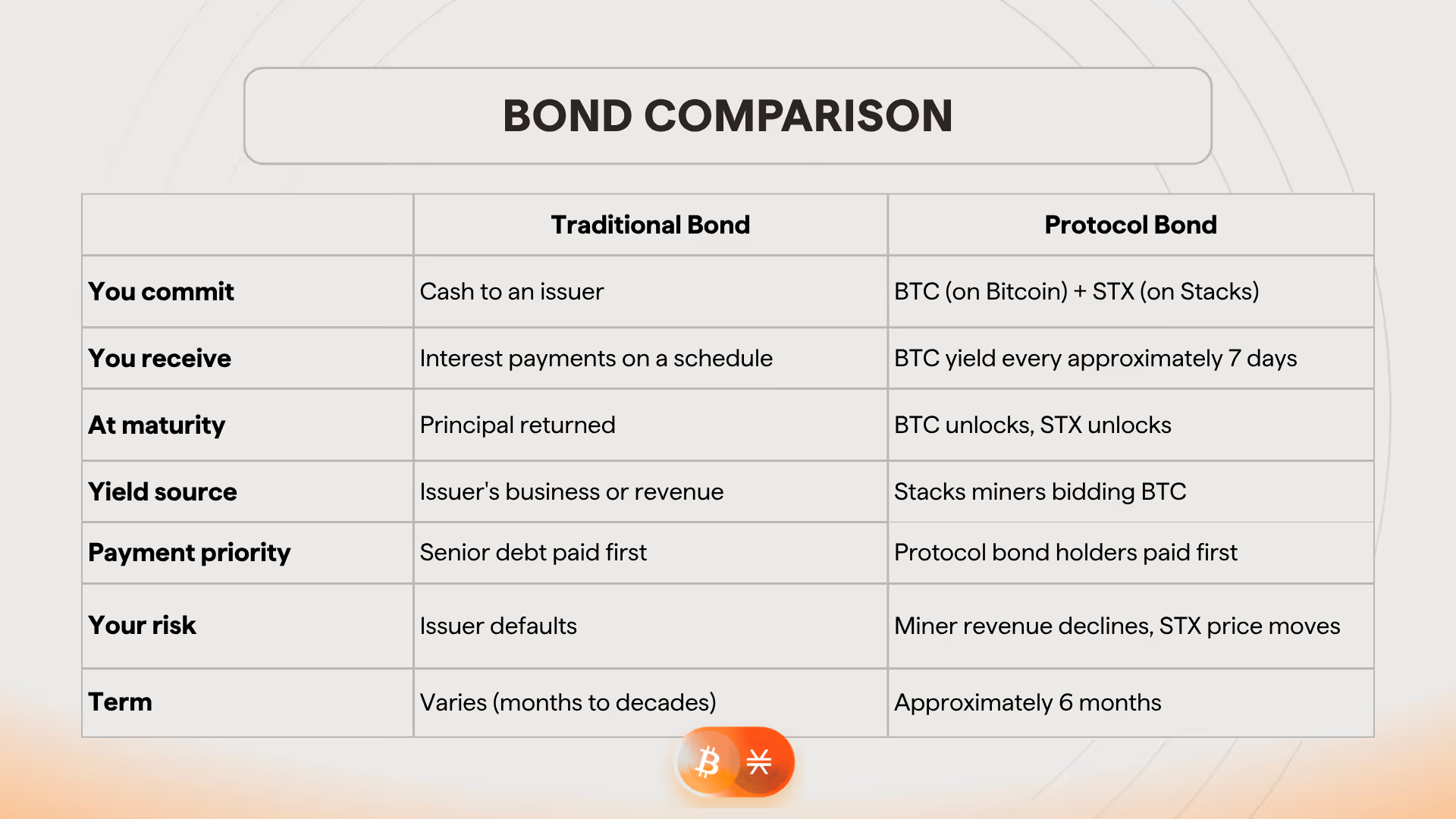
The key structural difference is the absence of an issuer or a contract. A traditional bond is a promise from an entity. A protocol bond is a position within a consensus mechanism that performs useful work for that consensus mechanism. Yield comes from miner activity rather than from cashflows derived from revenues and a company's ability to pay. There is no entity on the other side that can default.
Another notable difference is that traditional bonds are heavily regulated, standardized forms of debt obligation. Protocol bonds are not bonds or contractual arrangements, but an emerging class of DeFi innovations that allows people to trade useful work participating in consensus in exchange for on-chain rewards generated as a consequence of a decentralized consensus process.
Waterfall Distribution Structure
There are multiple participation paths for Bitcoin Staking. The system uses a payment waterfall, to prioritize the distribution of STX yield among participants:
First: Protocol bond holders. Every reward cycle, miner BTC is allocated to pay bond holders at the clearing yield rate.
Second: STX-only stakers. Any excess miner revenue after protocol bond obligations are paid out is split between STX-only stakers and the decentralized on-chain reserve fund, with STX-only stakers taking 85% of the excess miner revenue. This tranche absorbs yield variability so that protocol bond holders experience a more stable yield.
Third: The reserve fund. 15% of any excess revenue is set aside to buffer future cycles in which miner revenue may decline.
What Is Required to Create a Protocol Bond
- BTC: The amount to be committed, locked on Bitcoin L1 via a standard timelock for approximately six months.
- STX: Worth approximately 5% of the BTC position value, locked in a smart contract on Stacks for the same period.
- An auction bid: The participant submits the lowest yield they would accept in the sealed-bid capacity auction. If the bid clears, the participant is allocated a position.
The auction is designed to be permissionless and open to any participant. [Note: the initial bootstrap phase (PoX-5) launches with vetted partners and a community tranche. Fully permissionless participation expands in the next phase (PoX-6). Confirm exact access details with team before publishing.]
Two Ways to Create a Protocol Bond
Option A: Native BTC on L1
Lock BTC on Bitcoin using a standard timelock. Full self-custody throughout. The bitcoin never leaves Bitcoin L1. This option is appropriate for participants who prioritize direct custody of the underlying asset above all other considerations.
Option B: sBTC on Stacks
Use sBTC, a BTC-backed asset on Stacks, instead of a native L1 timelock. The yield, priority, and protocol bond structure are identical. The difference is that the position is DeFi-composable, allowing potential integration with liquid staking tokens, smart contract strategies, or programmatic position management. This option is appropriate for participants who want flexibility alongside yield.
Why This Matters
Protocol bonds represent the first structured, self-custodial mechanism for BTC holders to earn yield without transferring their bitcoin to a third party. The structure, with waterfall distribution, a reserve buffer, and yield sourced from a mining mechanism with over five years of continuous operation, is designed for participants who evaluate yield products based on custody, transparency, and risk structure.
It requires comfort with a six-month lockup, a small STX position, and a yield target that depends on miner economics. For participants for whom those terms are acceptable, it offers a BTC yield product in which earning and self-custody are not in conflict.
Read the Bitcoin Staking Whitepaper for full protocol bond specifications.
Read next: From BitBonds to Protocol Bonds | Where Does the Yield Come From?
Get more of Stacks
Get important updates about Stacks technology, projects, events, and more to your inbox.
.png)

.png)


