.avif)
Everything You Need to Know About Applying for a Stacks Endowment Grant
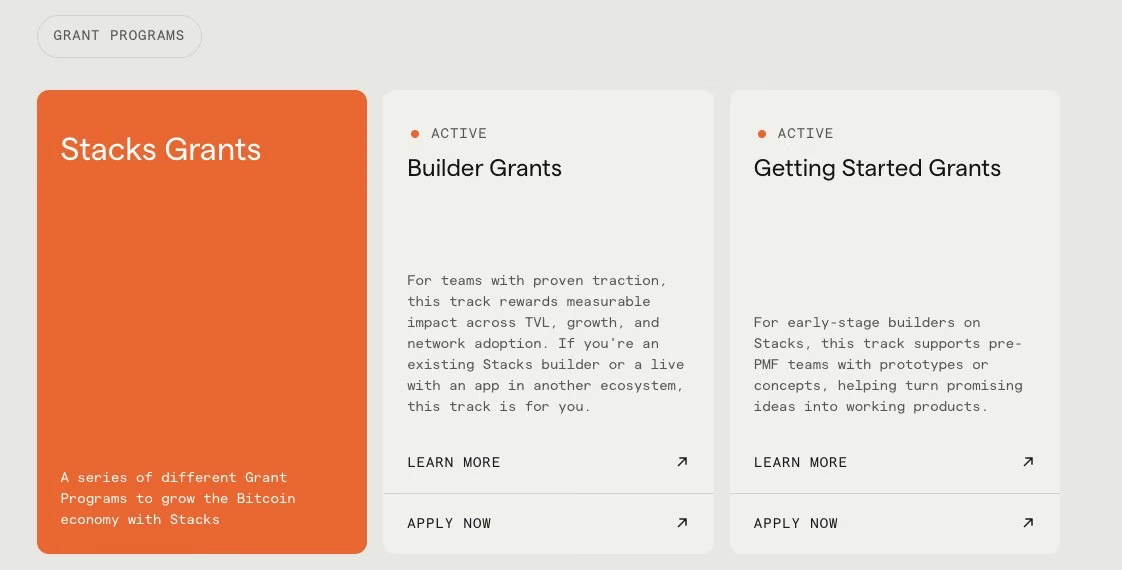
If you're considering applying for a Stacks Endowment grant, this guide covers what you need to know from choosing the right track to understanding how applications are evaluated.
The two active grant tracks
The Stacks Endowment currently has two active tracks, each designed for a different stage of building.
Builder Grants
For teams with proven traction. If you have a live product on Stacks or another ecosystem with measurable impact across TVL, growth, or adoption, this track is designed for you. Funding up to $50,000.
Getting Started Grants
For early-stage builders. If you're pre-product-market fit with a prototype, spec, or early community traction, this is where most builders begin. Funding up to $10,000.
Not sure which fits? If you have a live product or demonstrable traction, apply for Builder Grants. If you're earlier than that, a concept, prototype, or clear plan, Getting Started is the right starting point.
What the Endowment looks for
Every proposal is evaluated against four core qualities:
1. Strategic alignment: Does the project address a meaningful gap in the Stacks ecosystem? Proposals that align with current ecosystem priorities: infrastructure, tooling, DeFi, developer experience tend to score well.
2. Feasibility: Can the team realistically deliver what they're proposing? This comes down to whether milestones are scoped appropriately, the budget is reasonable, and the team has evidence of relevant execution.
3. Ecosystem impact: Will this project create tangible value for Stacks users, developers, or the broader ecosystem? The Endowment prioritizes projects with clear, measurable impact over those with ambitious but undefined outcomes.
4. Commitment to Stacks: Is this team building on Stacks for the long term? Proposals that demonstrate a genuine commitment to the ecosystem stand out.
How applications are evaluated
Each application is scored on a 0–5 scale across six criteria:
1. Strategic alignment: How well does the project align with the current needs and priorities of the Stacks ecosystem?
2. Ecosystem impact: What is the potential for meaningful, measurable impact on users, developers, or infrastructure?
3. Feasibility: Are the milestones realistic? Does the team have the capacity and track record to deliver?
4. Budget reasonableness: Is the funding request proportionate to the proposed deliverables? Are costs clearly tied to milestones?
5. Risk profile: What are the primary risks, and has the team accounted for them? Lower-risk proposals with clear mitigation strategies score higher.
6. Ecosystem commitment: Is this a team that will continue building on Stacks beyond the grant period?
Reviewers use these scores to prioritize proposals. A strong score across all six criteria is the clearest path to funding.
Writing a strong proposal
After reviewing many proposals across the Stacks ecosystem, consistent patterns separate the applications that move forward from those that don't. Nearly all of it comes down to clarity.
Your summary should be concise and immediately clear. One paragraph. Three questions answered: What are you building? Who is it for? Why does it matter for Stacks?
Before:
"We are developing an innovative multi-layered DeFi architecture that leverages the unique consensus properties of the Stacks blockchain to create a paradigm-shifting approach to decentralized liquidity provisioning across Bitcoin L2 ecosystems."
After:
"We're building a lending protocol for STX holders. Right now there's no native way to earn yield without bridging to another chain. We're building a straightforward borrow/lend interface, with testnet targeted for April and mainnet for June."
The second version communicates significantly more.
Milestones should be specific and verifiable. A milestone answers: What specific thing will exist that doesn't exist today, and by when? Two to four milestones is the right range. Each one needs a concrete deliverable, a target date, and a way to verify completion.
Weak:
"Develop core protocol functionality and begin community outreach."
Strong:
"Deploy lending smart contract to Stacks testnet with deposit and withdraw functions by April 15. Deliverable: testnet contract address and walkthrough documentation."
Your budget should connect directly to deliverables. Tie each line of the budget to a specific milestone. This structure allows reviewers to evaluate each component independently and makes partial funding easier. For early-stage builders, a focused ask for your first few milestones often moves faster than a large upfront request.
The team section should focus on evidence. GitHub profiles, deployed contracts, previous projects, and past grant work speak for themselves. Two sentences of context plus relevant links is more effective than two pages of credentials. Solo developers are welcome. Scope your milestones to match your capacity.
What won't be funded
The Endowment does not fund projects that are purely speculative with no clear path to delivery, projects that duplicate existing well-functioning ecosystem infrastructure without meaningful improvement, or proposals where the primary use of funds is marketing or token-related activity rather than building.
KYC and compliance
All grant recipients are required to complete KYC (Know Your Customer) or KYB (Know Your Business) verification before funds are disbursed. The Stacks Endowment operates under Cayman Islands regulations, and compliance with applicable laws is a condition of funding. This process is handled after a proposal is approved. You do not need to complete it before applying.
What happens after you apply
Once your application is submitted, the review team evaluates it against the scoring criteria outlined above. If your proposal is selected, you'll receive a notification with next steps, including KYC/KYB verification and a grant agreement outlining milestones and disbursement terms. Funding is released in stages as milestones are completed and verified.
If your proposal isn't selected in this round, you're welcome to reapply in future rounds with an updated or revised proposal.
Getting help with your application
If you have questions about the application process, eligibility, or which track is right for your project, the Stacks Endowment team is available to help. Reach out on X to the Stacks Endowment handle or ask on the Stacks forum.
You can also review example applications here.
The grants page also includes additional resources and guidance for applicants.
Apply
Applications for Stacks Endowment grants close March 13, 2026.
The two active tracks are:
- Builder Grants (up to $50K for teams with proven traction)
- Getting Started Grants (up to $10K for early-stage builders).
Apply here → stacksendowment.co/grants
Get more of Stacks
Get important updates about Stacks technology, projects, events, and more to your inbox.