.avif)
Pooled Bitcoin Staking on Stacks: How It Works
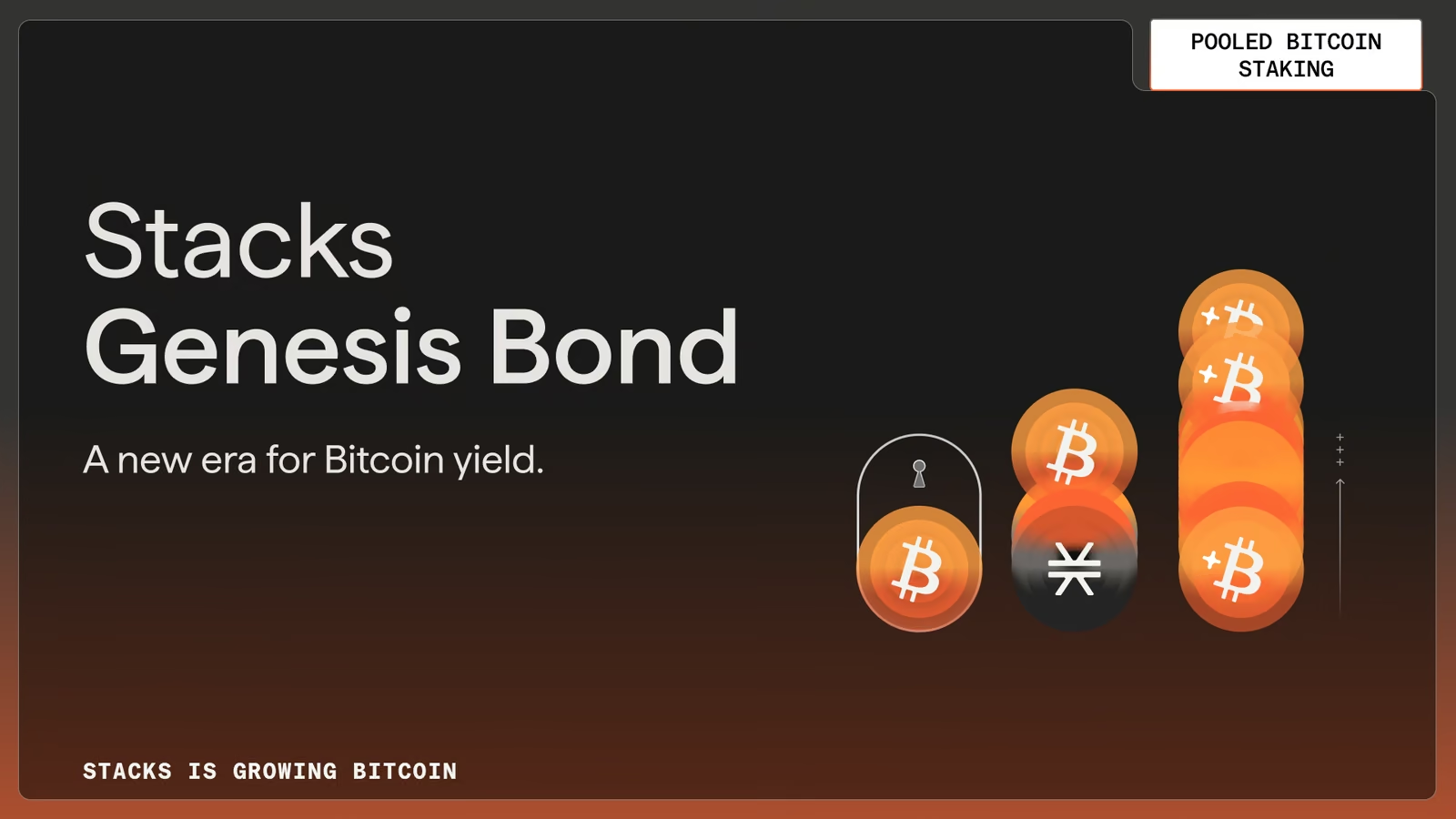
With the launch of the Genesis Bond, pooled Bitcoin staking is a way to participate in Bitcoin Staking on Stacks without going through a whitelist or applying for approval. It’s the open path into the protocol during this bootstrap phase as any BTC or STX holder can join through an ecosystem pool. Pooled staking different from a self-custodial position, where you lock your BTC on the L1 under your own custody. With pooled staking, a pool does that locking on your behalf.
The yield itself comes from the same place either way. Stacks miners spend BTC to win the right to mine blocks, and earn STX in return. That spent BTC is what pays Bitcoin Staking participants, funded by real miner activity. Pooled staking taps into that same BTC flow, just through a pool instead of a direct, self-custodial position.
See Bitcoin Staking Genesis Bond: How It Works for the full mechanics.
In pooled staking, your BTC moves onto Stacks through sBTC, a 1:1 Bitcoin-backed asset managed by a decentralized group of signers rather than a single custodian. The pool operator manages the underlying bond on your behalf. There are two underlying trust assumptions with pooling: the signer group that secures sBTC, and the pool operator that runs the bond. That trade-off is what makes pooling open to anyone during this early phase.
A share of each bonding period's total capacity, targeted at approximately 10%, is set aside for pools and reviewed after every period.
How It Works Mechanically
Each pool holds whitelisted capacity from the Stacks Endowment and operates a protocol bond on behalf of its participants. The pool constructs the BTC timelock on the Bitcoin L1, locks the paired STX, and divides rewards back out to pooled participants. Participants interact with the pool and the pool interacts with the Stacks protocol.
Pool operators decide how participants get in, not the protocol. There are currently three ways to do it:
- Deposit a single asset: BTC or STX, and the pool pairs it for you.
- Deposit a bonded pair: BTC and STX together, at the same ratio as a self-custodial position.
- Get a liquid token: deposit either asset and receive a token representing your position (stBTC), one you can put to use elsewhere in the Bitcoin economy on Stacks.
However participants deposit, their BTC reaches the pool through sBTC. The signers require a 70% consensus for any deposit or withdrawal, removing the need for a single custodian. sBTC is how BTC moves from the Bitcoin base layer into Stacks and back again, and it's the layer every pool sits on top of regardless of participation model.
Where the Yield Comes From
Pooled Bitcoin staking runs on the same mechanism as the Genesis Bond: miners spend BTC to win the right to mine Stacks blocks and earn STX in return, and that spent BTC flows to Bitcoin Staking participants.

One difference matters for pool depositors specifically: the rate you see is net of each pool's own fees and mechanics, set by the pool rather than by the protocol directly. That's why your pooling rate likely won't match the institutional target of 3% APY. It's a function of pool economics.
The Pools
Each pool is its own product, with its own mechanics, terms, and risk profile. Read a pool's own documentation before depositing into it. Make sure to follow their channels, as more information about their capacity, product-readiness, and requirements will be available closer to launch. Details will get updated in this article as well. The confirmed pools are: Stacking DAO, Fast Pool, and Xverse.
How Pool Capacity Is Allocated
The Stacks Endowment allocates each bonding period's pool capacity to ecosystem pools with a credible operating history running STX staking pools that have committed to participating in the current bond. The Endowment does not operate, endorse, or underwrite any individual pool.
The same allocation philosophy that applies to anchor participants applies here: pool capacity goes to products that bring new participants into the Bitcoin economy on Stacks.
What Comes Next
PoX-6 removes the whitelist. Bitcoin Staking opens up to a permissionless auction, subject to the standard Stacks Improvement Proposal (SIP) process, and anyone will be able to run a self-custodial position directly, the same structure institutions use in the Genesis Bond, without going through a pool first.
Pooling doesn't disappear once that happens. Even under a permissionless auction, running your own self-custodial position takes real capital to make worthwhile, so pooling stays the way in for anyone who doesn't clear that bar, along with anyone who'd simply rather deposit into a pool than manage a bond themselves.
Bitcoin Staking is only the first piece of Bitcoin-native finance on Stacks: self-custodial lending, privacy tooling, AI-directed capital management, and sBTC payments are all active areas of research and development, other ways to put Bitcoin to work without ever giving up custody of it.
FAQ
Do I give up custody of my BTC?
Yes. Pooled Bitcoin Staking is not self-custodial. Your BTC moves onto Stacks as sBTC, where it's secured by a signer set that requires 70% consensus from independent institutional operators before any deposit or withdrawal. No single party can move it, which is a different risk than handing BTC to one custodian and trusting it to operate honestly. It's still not the same as a self-custodial Genesis Bond position, where BTC is timelocked directly on Bitcoin L1 under your own custody.
Why go through a pool?
Pools are open. There's no whitelist approval, no application, and no 50+ BTC minimum, so a pool is how you participate in Bitcoin Staking today if you're not an approved anchor participant. Roughly 10% of each bonding period's capacity is reserved for pools, allocated to operators with a credible history of running STX pools.
Is my BTC leaving Bitcoin?
Your BTC moves onto Stacks as sBTC, a 1:1 Bitcoin-backed asset secured by a signer set requiring 70% consensus on any deposit or withdrawal. It's not custodied by a single party, and it can move back to Bitcoin L1 through the same signer set.
Can I participate with just BTC, or do I need STX too?
Depends on the pool. Some pair BTC and STX for you from a single asset; others require a bonded pair. Check the specific pool's card above.
What do I receive when I deposit, and can I withdraw early?
This depends on the pool and its participation model. See the pool card above, and that pool's own documentation, for specifics.
Why is my rate different from the institutional rate?
Pool yields are net of that pool's own fees and mechanics. The rate you see comes from the pool, not directly from the protocol.
How do I get my BTC back to the Bitcoin L1?
Through an sBTC withdrawal, processed by the signer set. Check your specific pool's documentation for its withdrawal process and timing.
Get more of Stacks
Get important updates about Stacks technology, projects, events, and more to your inbox.